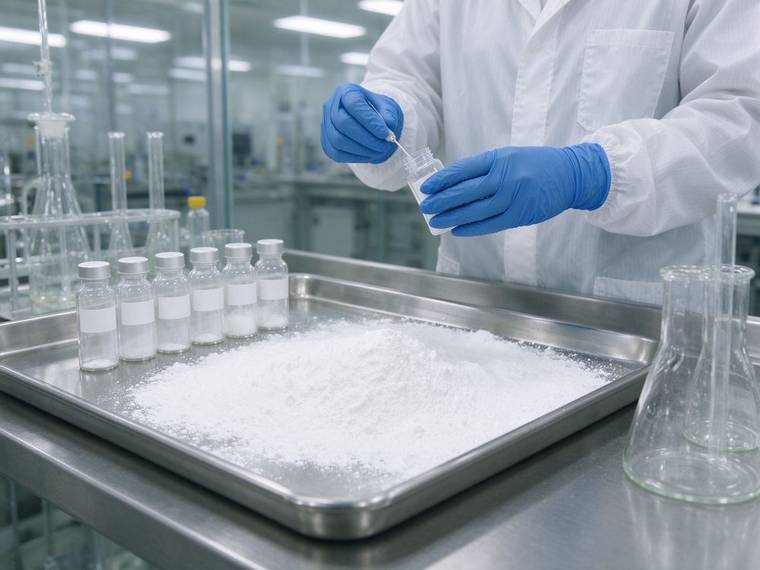

Quality control laboratory

Quality control laboratory · representative image

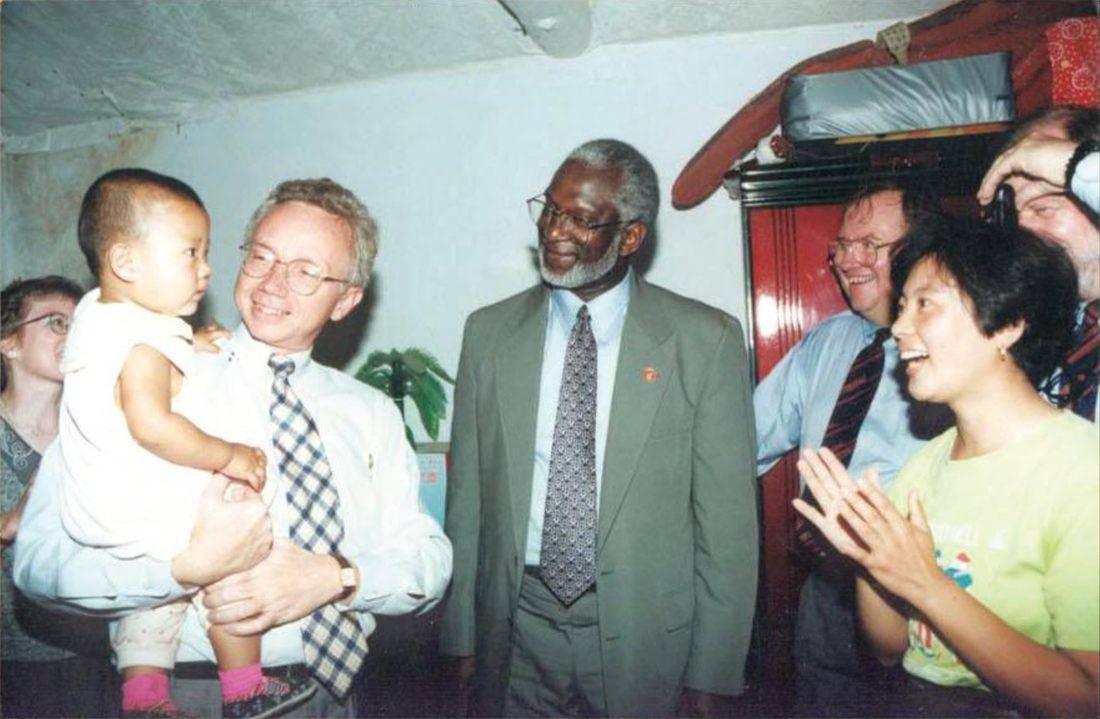
International researchers visiting a family, 1990s

From a public health question to a reference dose

The question started with a number. Through the 1980s, neural tube defect rates were reported at roughly 7 per 1,000 births in high-incidence regions, 3–6 per 1,000 in the United Kingdom, and about 1 per 1,000 worldwide. Researchers at the 1983 international perinatal meeting treated that gap as a nutrition problem worth testing, and folate became the candidate.

The work moved quickly into international collaboration. A research relationship with the US Centers for Disease Control and Prevention began in 1984 and was formalised in 1986, and an international research programme on neural tube defect prevention launched in 1991.

The programme ran for 13 years and covered 250,000 women of childbearing age, with more than US$20 million invested. Its results were published in The Lancet in 1997, and the 0.4 mg dose it established became the reference dose cited in WHO guidance and in pharmacopoeial standards from the United States, Britain, Europe and Japan.

40+
years of folate research behind the brand
250,000
women in the clinical programme
13
years of study
0.4 mg
reference folate dose
The 5P Precision Nutrition Model
Precise
01
Precise
A defined life stage, a defined nutritional gap.
  • Stated population, stated need.
Pure
02
Pure
Source and grade, with a traceable supply record.
  • Identity and origin per lot.
Personalized
03
Personalized
Dose and format follow the person.
  • Formats differ for a reason.
Portable
04
Portable
Formats built to travel and to be taken every day.
  • Adherence is a design problem.
Professional
05
Professional
Choices follow published research and clinical guidance.
  • Reviewed before the label.
The 5P model describes how formulas are designed and how quality is controlled.
Quality
Raw materials
Raw materials
Key ingredients are specified by source, grade, and purity. Where a supplier holds an ingredient-level recognition — such as a US FDA GRAS determination — that recognition applies to the ingredient, not to the finished supplement.
Quality control
Quality control
Every batch is checked against its specification before release, covering identity, potency, and microbiological safety. Records are retained so that a finished lot can be traced back to its ingredient lots.
Supply chain
Supply chain
Production partners are qualified before use and reviewed against certificate validity. When a certificate expires, the corresponding claim comes off the website until a new certificate is issued.
Have a scientific question?
We answer product, formulation, and evidence questions from partners, clinicians, and media.